
RET-MAP Registry
International multicenter registry

Mapping RET fusion–positive lung cancer, together.

RET-MAP brings together clinicians, researchers and real-world patient data from around the globe to better understand this rare disease and improve outcomes for every patient affected by it.

Join the registry Learn more
50+participating centers worldwide
700+patients enrolled
2021launched at Gustave Roussy
About RET-MAP

A shared mission for a rare disease

RET-MAP is an international multicenter registry dedicated to patients diagnosed with lung cancer harboring a RET fusion. Launched in 2021 on the initiative of Gustave Roussy, it brings together clinicians, researchers, and real-world patient data from around the globe, with a shared mission: to better understand this rare disease and improve outcomes for every patient affected by it.

RET fusions are identified in approximately 1–2% of non-small cell lung cancers (NSCLC), a small but significant proportion, representing thousands of patients worldwide each year. Because of this rarity, no single institution can gather enough cases alone to draw meaningful conclusions. RET-MAP was built precisely to bridge this gap, creating a collaborative platform where data from many centers can be pooled, analyzed, and transformed into knowledge that benefits patients everywhere.

Non-interventional by design

The registry does not change or interfere with the treatments patients receive. Instead, it collects real-world clinical, biological, and molecular data, alongside optional tumor tissue samples, to build the most comprehensive picture of this disease.

Today, RET-MAP includes over 50 participating centers worldwide and more than 700 patients, with continuous expansion and ongoing data collection, driven by the enthusiasm of an international community of physicians and researchers who believe that collaboration is the most powerful tool we have for rare diseases.

Objectives

What the registry aims to achieve

The central goal is a comprehensive and integrated characterization of RET fusion–positive lung cancer, combining clinical, molecular, and outcome data across a broad and diverse patient population.

1

Clinical characterization & treatment outcomes

Describing patient demographics, disease characteristics, and treatment patterns across all lines of therapy (including selective RET inhibitors, chemotherapy, immunotherapy, and post-progression strategies) to build a richer, evidence-based understanding of this rare disease.

2

Molecular landscape & resistance mechanisms

Characterizing the molecular profile of RET fusion–positive NSCLC and identifying mechanisms of primary and acquired resistance to targeted therapies, laying the scientific rationale for future clinical trials and new treatment options.

3

Artificial intelligence for RET fusion detection

Developing and validating deep learning models capable of predicting the presence of RET fusions directly from standard histopathological slides (H&E staining), with the potential to make diagnosis faster and more accessible worldwide.

4

Prediction of prognosis & treatment response

Building integrative models that combine clinical, molecular, and morphological features to help predict individual patient outcomes and likelihood of response to specific therapies.

5

Biomarker discovery & new therapeutic targets

Investigating the expression of emerging targets (including those relevant for antibody–drug conjugates, bispecific antibodies, and other novel agents) to identify new treatment strategies for patients who have exhausted current options.

These objectives were defined at the beginning of the project, but the registry is designed to evolve. As new scientific questions emerge and new centers join, additional research directions may be incorporated over time, reflecting the living and collaborative nature of RET-MAP.

Patients & Data Collection

Who is included and how data is collected

Eligible patients

Adult patients with a confirmed diagnosis of lung cancer harboring a RET fusion, at any stage of disease and regardless of the treatments they have received.

Secure data capture

Clinical and biological data and treatment outcomes are collected using REDCap, a secure and validated electronic data capture platform, harmonizing data across centers while guaranteeing full patient privacy and data protection.

Publications

Scientific output

Since its launch, the registry has produced a growing body of scientific publications, presented at major international conferences and published in leading oncology journals. Each study reflects the collective contribution of dozens of centers and hundreds of patients.

Articles

  • 2023
    RET-MAP: An International Multicenter Study on Clinicobiologic Features and Treatment Response in Patients With Lung Cancer Harboring a RET Fusion.Aldea M, Marinello A, Duruisseaux M, et al. J Thorac Oncol. 2023;18(5):576-586. doi:10.1016/j.jtho.2022.12.018
  • 2023
    Prevalence of Thromboembolic Events in Patients With Non-Small Cell Lung Cancer and RET Fusions.Aldea M, Marinello A, Guyon D, et al. JAMA Oncol. 2023;9(11):1583-1584. doi:10.1001/jamaoncol.2023.3625
  • 2025
    Expression of Membrane Targets for Therapeutics in RET-Positive Non-Small Cell Lung Cancer.Marinello A, Ghigna MR, Rotow JK, et al. JAMA Oncol. 2025;11(7):762-770. doi:10.1001/jamaoncol.2025.1293
  • 2026
    Retreatment with First-Generation Selective RET Inhibitors in RET-Rearranged NSCLC Pretreated with Selpercatinib or Pralsetinib: Results from the RET-MAP Registry.Marinello A, Rotow JK, Lomibao M, Miliziano D, Leporati R, Feng J, … Aldea M. Clin Cancer Res. 2026;32(13):2637-2643. doi:10.1158/1078-0432.CCR-25-4814
  • 2026
    New · Online nowSecond- and third-line outcomes after selective RET inhibitor failure in RET fusion-positive metastatic lung cancer: A real-world analysis from the RET-MAP registry.Miliziano D, Rotow JK, Lomibao M, Marinello A, Bote-de Cabo H, … Aldea M. Clin Cancer Res. 2026. Published online October 14, 2026. doi:10.1158/1078-0432.CCR-26-2942

Congress presentations

  • 2024
    Poster presentation · ESMO Congress 20241294P — Non-adenocarcinoma histology in patients with RET+ lung cancer: Response to RET-inhibitors and survival from the RET-MAP registry.Marinello A, Massa G, et al. Annals of Oncology (abstract).
  • 2026
    Poster presentation · AACR Annual Meeting 2026Prognostic and predictive effects of TP53 co-mutations and RET fusion partners in RET-rearranged advanced NSCLC.Miliziano D, Rotow JK, Lomibao M, Adeyelu T, Marinello A, Cabo HBD, … Aldea M. Cancer Research 86(7_Suppl):2434.
Team

The people behind RET-MAP

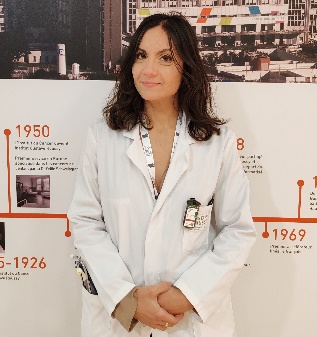
Mihaela Aldea

Mihaela Aldea, MD, PhD

Principal Investigator · Assistant Professor, Medical Oncology · Paris-Saclay University · Gustave Roussy

Mihaela Aldea is an Assistant Professor at Paris-Saclay University and a medical oncologist in the Thoracic Cancer Group at Gustave Roussy in Villejuif, France. She obtained her medical degree from the Iuliu Hațieganu University of Medicine and Pharmacy in Cluj-Napoca, Romania, and completed her medical oncology training at Gustave Roussy. She was a visiting scientist at Dana-Farber Cancer Institute in Boston for two years.

Dr Aldea conducts collaborative clinical and translational research, with a particular focus on biomarkers of tumor response and resistance and on RET-positive lung cancer. She leads the RET-MAP global registry dedicated to characterizing RET fusion–positive lung cancer.

She is an active member of ESMO and a current member of the Education Committee of the IASLC. She is a recipient of the L’Oréal–UNESCO For Women in Science Award and the IASLC Young Investigator Award.
ESMOIASLCL’Oréal–UNESCO For Women in Science
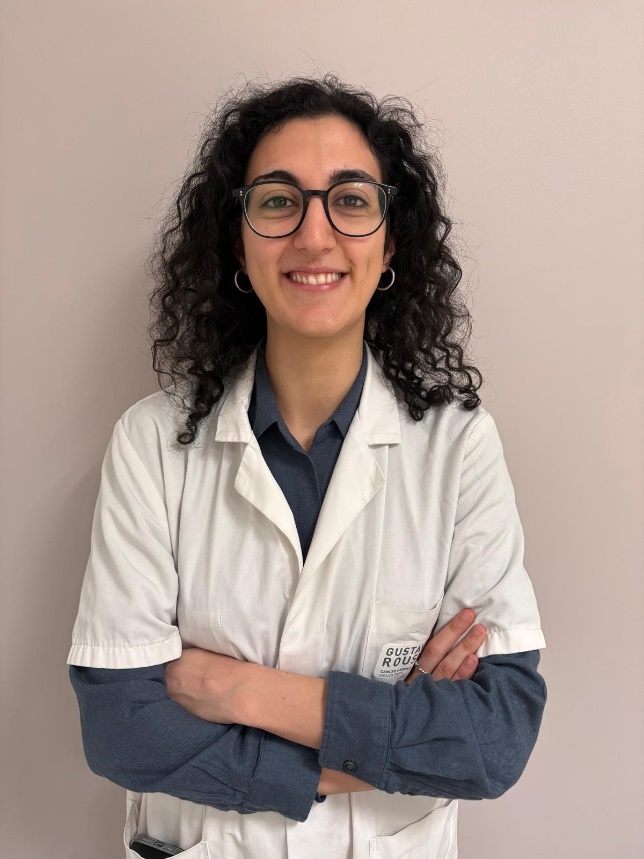
Daniela Miliziano

Daniela Miliziano, MD

Medical Oncology · Gustave Roussy

Daniela Miliziano is a medical oncologist with expertise in thoracic oncology. She obtained her medical degree from Sapienza University of Rome, Italy, and completed her residency in Medical Oncology at the Istituto Nazionale dei Tumori in Milan, spending her final year as a Clinical Fellow in the Thoracic Oncology Unit at Gustave Roussy, Villejuif, France.

Since November 2025, she has been actively involved in clinical and translational research under the mentorship of Dr. Aldea, contributing to the scientific activities and expansion of RET-MAP. She is currently pursuing a one-year DUERTECC research project at Gustave Roussy investigating the mechanisms of early progression under treatment with RET inhibitors, such as selpercatinib and pralsetinib, with particular attention to baseline molecular features including fusion partners and TP53 co-mutations.

ESMOEORTCAACRAIOM
Arianna Marinello

Arianna Marinello, MD

Medical Oncology · Gustave Roussy

Arianna Marinello is a medical oncologist with dedicated expertise in thoracic oncology and a strong focus on translational, innovation-driven cancer research. She completed her clinical training at Humanitas Research Hospital and in 2021 joined Gustave Roussy, where she has worked under the mentorship of Professor Benjamin Besse and Dr. Aldea, contributing to the development of RET-MAP.

She is currently pursuing a PhD in basic science at Paris-Saclay University, focusing on myeloid cell reprogramming in lung cancer, with particular emphasis on tumor–macrophage interactions under tyrosine kinase inhibitor exposure in oncogene-addicted NSCLC. In parallel, she maintains a strong commitment to survivorship research and quality-of-life outcomes during and after targeted therapy.

EORTCESMOIASLCAACR
Contact

Get in touch

If you are a physician interested in contributing to the registry, a researcher looking to collaborate, or a patient seeking to learn more about the platform and its objectives, please do not hesitate to get in touch with our team.